
Sequence Memory
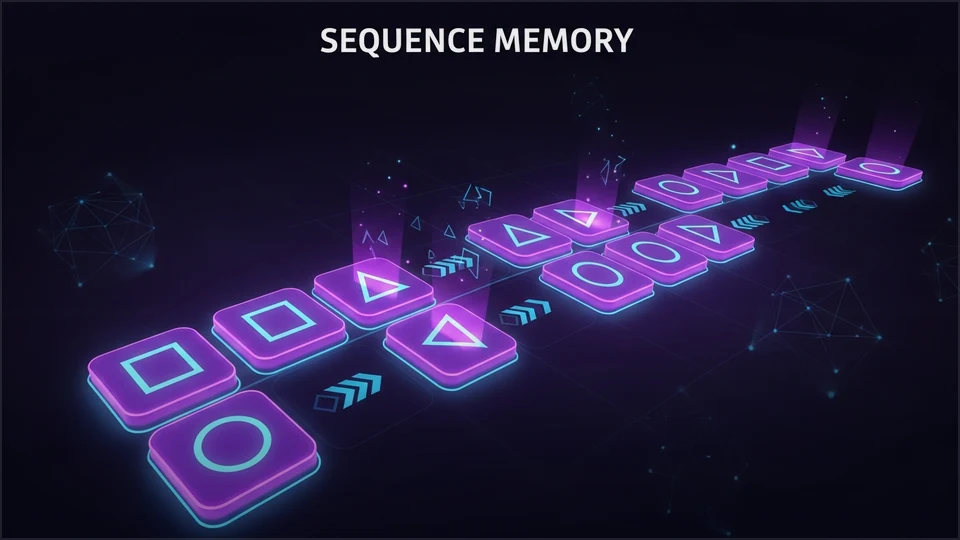
Sequence Memory is the classic four-color pattern game turned into a group elimination match. Every operative watches the same sequence play out on the shared grid of red, green, blue, and yellow pads, then all players replay it simultaneously on their own boards. Survive, and the system appends one more color and transmits the longer sequence; the pattern never resets, it only grows.
One wrong press severs your neural link instantly, and there is no rejoining mid-session. The board tracks everyone's live progress through the current sequence, so you can watch rivals inch through the pattern in real time, and the last operative still synced claims the win and 20 points.
Rules of Engagement
- 01The host initiates the sequence and a single color flashes on the shared four-pad board.
- 02Every player replays the full sequence from the start on their own pad, at their own speed.
- 03When all surviving players complete it, one new color is appended and the longer sequence plays again.
- 04One wrong press eliminates you immediately; eliminated players spectate the rest of the session.
- 05Live progress counters show how far through the sequence each operative has gotten.
- 06The last player remaining wins the match and 20 points; the round counter records how deep the group went.
Strategic Intelligence
- Encode the sequence as rhythm, not just color; a chant like "red-red-blue" survives longer than a mental picture.
- Replay the pattern in your head during the playback phase instead of passively watching it.
- Do not race. Input speed earns nothing, and rushing is what kills runs in rounds eight and beyond.
- Chunk long sequences into groups of three or four; memory athletes do it and it works at level 12.
- Watch opponents' progress counters for pacing only; their mistakes cannot help you, but panic can.
Tactical Suitability
For focus junkies and Simon veterans who want the classic formula with real stakes: everyone faces the identical sequence, so losses have no excuses. It doubles as legitimate working-memory training, and the simultaneous-input design means nobody sits waiting for a turn, which keeps even 8-player sessions tight.
Module FAQ
Technical Protocol Assistance